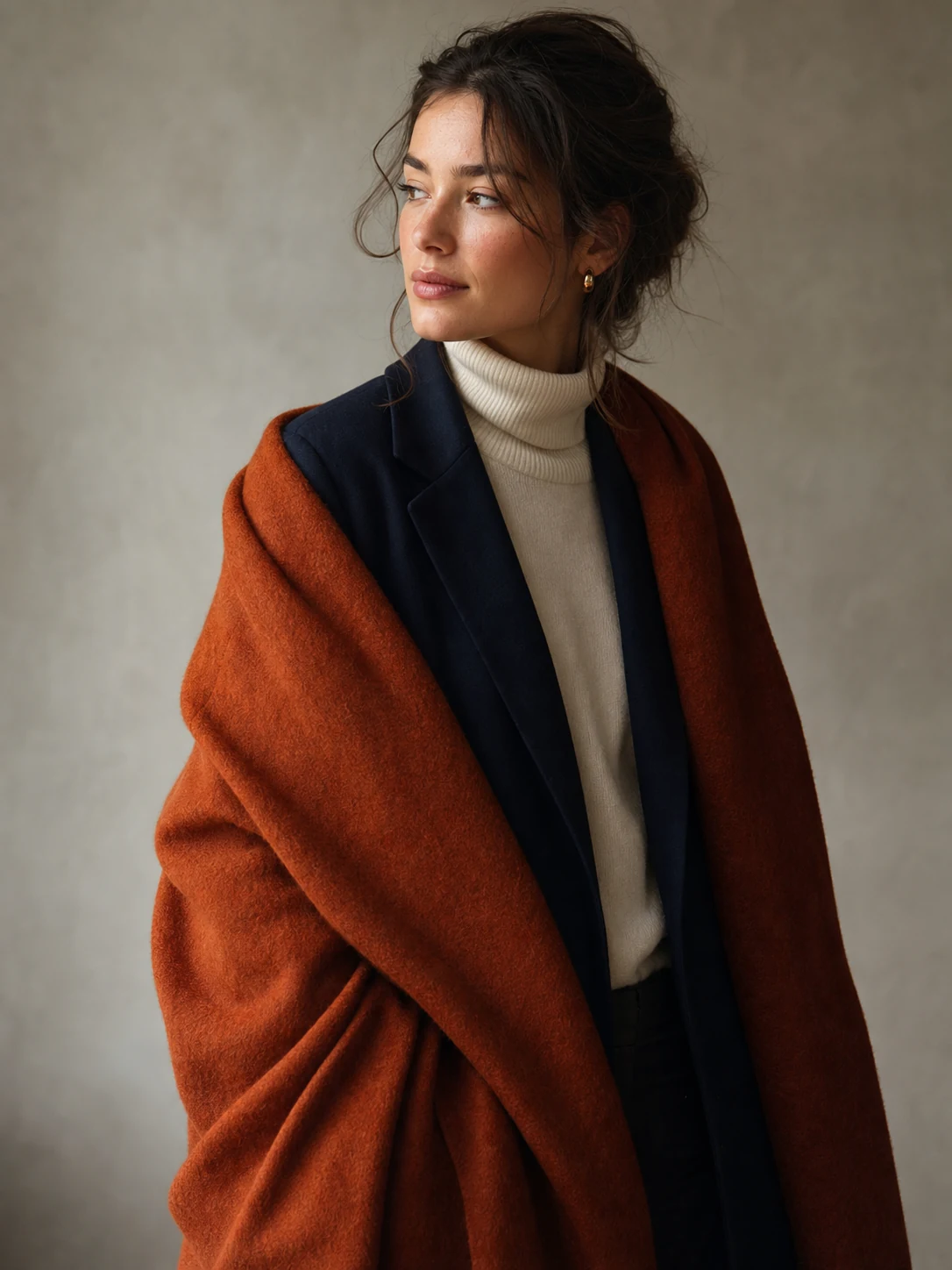
Colour Guides
How to Match Colors in Outfits (Without Buying a Whole New Closet)
A practical, slightly opinionated guide to clothing color combinations: wardrobe base colors, the three-color rule, and tonal dressing that makes repeat outfits look new again.
In This Guide
- Start with the Colors Your Closet Already Likes
- Let One Color Have the Microphone
- The Three-Color Rule Is a Great Place to Start
- When in Doubt, Find a Quiet Color
- Tonal Dressing: Same Family, Better Light
A friend of mine does not have a huge closet. Yet every time she arrives somewhere, I think: *Well. She looks great again.*
The mildly annoying part is that I have seen every piece before. The ivory knit. The chocolate trousers. The slate-blue coat she wore last fall. She just puts them together in a way that makes them feel newly invented.
One afternoon over coffee, I finally asked if she had been secretly shopping.
“No,” she said.
“Then why do your outfits always look new?”
She looked at me over her cup. “Maybe because you have enough memory for everyone’s dating history, but not enough left for my outerwear.”
Fair. We can all recall who said what in 2022. But whether a coat appeared last October? Apparently that is where the hard drive gives up.

Her actual answer was much more useful: when she buys something, she starts with color. Not in a “ignore the price tag and follow your aura” way. In a very real-life, check-the-price-first way. She asks whether the color can get along with the rest of her closet.
That is the quiet secret of good outfit color combinations. A closet can be full and still feel like a dinner party of strangers: a green top, purple pants, a red coat. Every guest is interesting alone. Seating them together may require a professional mediator.
Start with the Colors Your Closet Already Likes
Open your closet one day and ignore price, trends, and the shirt you have not worn since that one very optimistic vacation. Look only at color. You will probably see repeats: black, white, grey, cream, denim blue, brown, navy. Maybe one particular shade you keep buying without noticing.
Those are your wardrobe base colors. They do not need to be dramatic. Their job is to be socially skilled. They are the shades that already work with most of what you own.
A simple shopping test: can this new piece work with at least two colors that show up regularly in my closet? If yes, it has a future. If not, it may become one of those garments that was magnetic in the fitting room and oddly lonely at home.
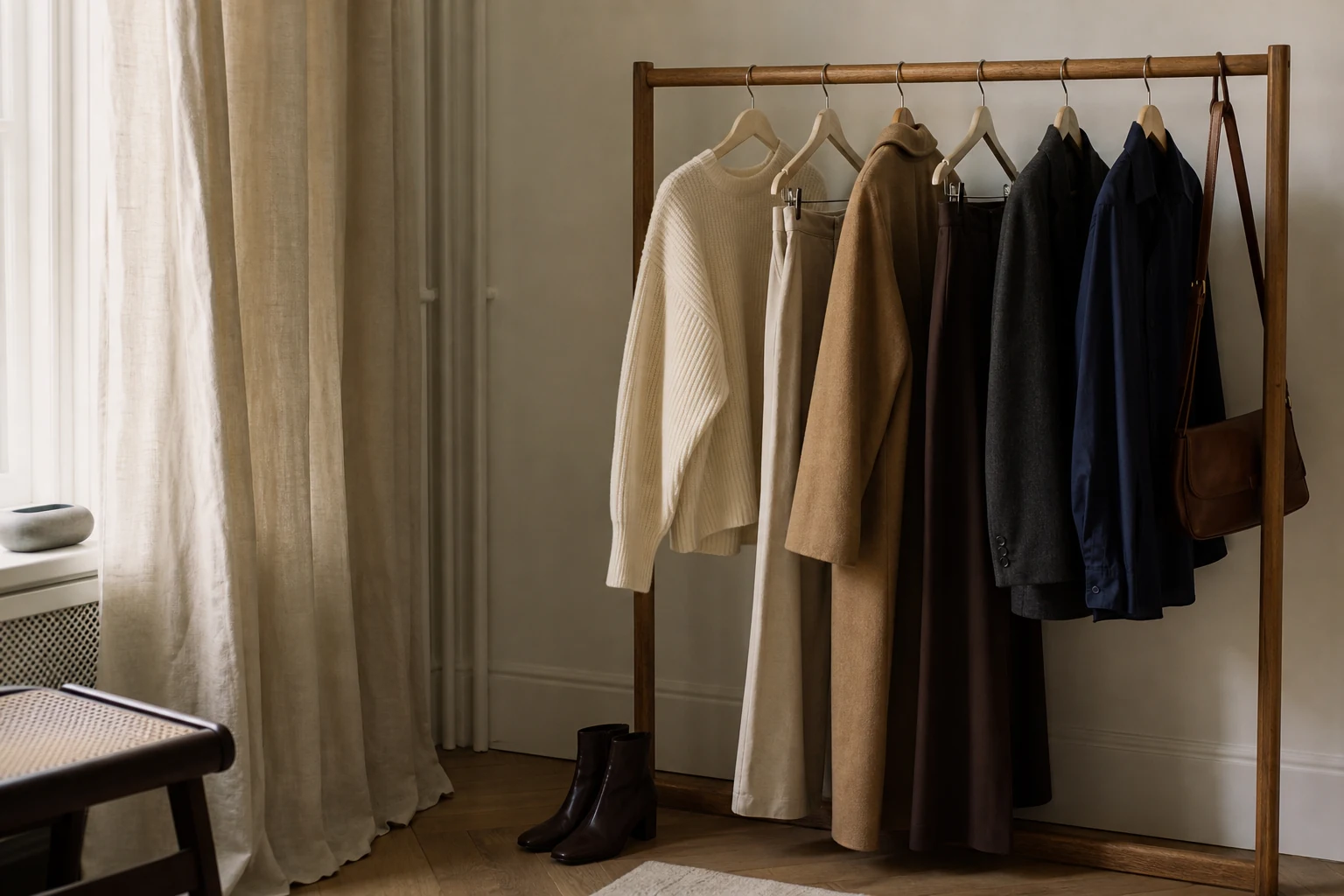
Building a palette does not mean wearing beige forever, unless that genuinely makes you happy. It means deciding which colors are your reliable foundations, then letting your favorite accents have somewhere to land. If you are refining the foundations, our capsule wardrobe guide is a good next stop.
Let One Color Have the Microphone
People often think knowing how to match colors in outfits means wearing more of them. Usually, it means being clear about who the main character is.
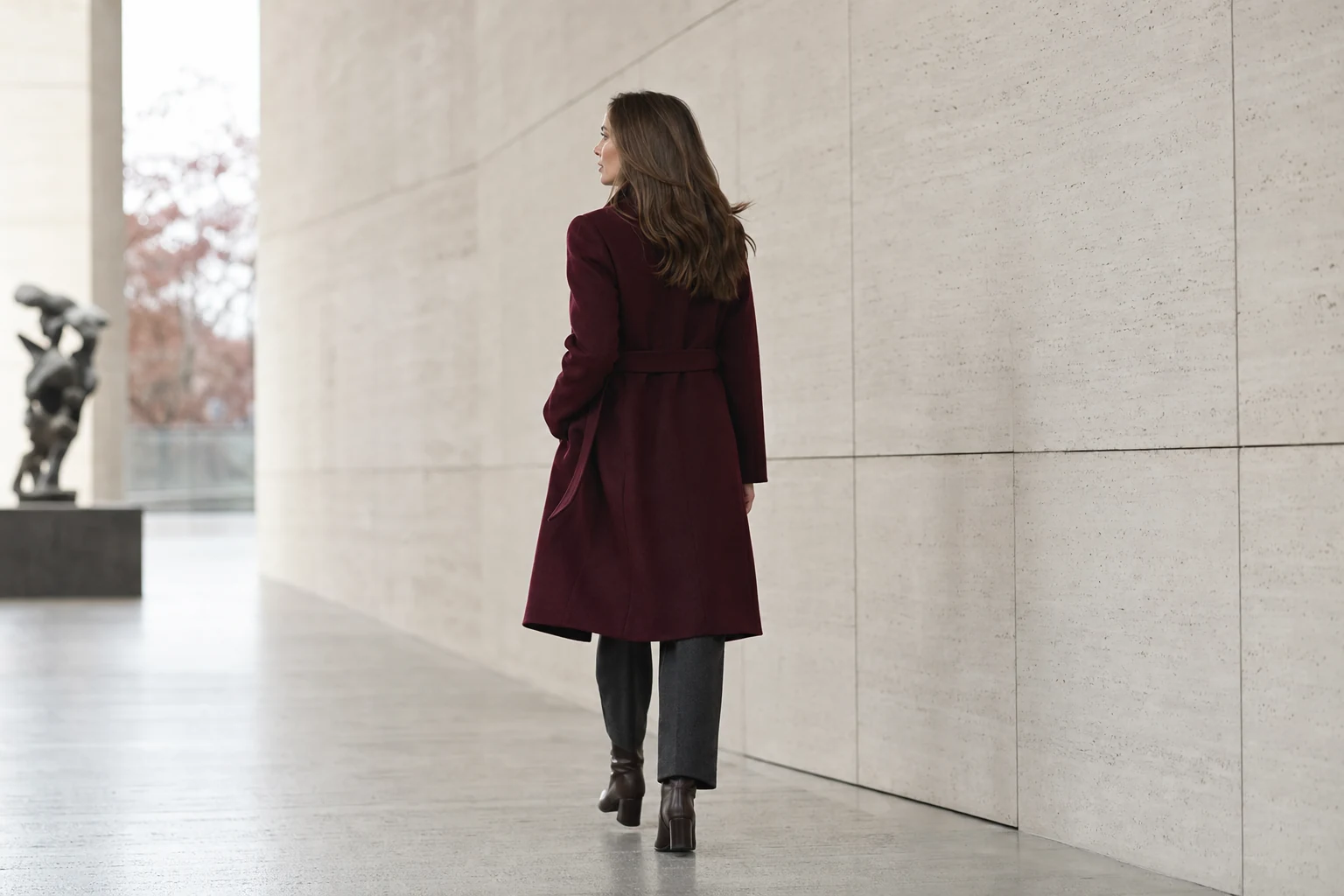
If you are wearing a beautiful burgundy coat, the other colors can relax. Burgundy with cream and charcoal is already a complete sentence. A forest-green dress with warm brown and ivory has plenty to say. If your bag is the bright moment, your clothes can be beautifully quiet.
Color works a little like conversation. When everyone is telling their best story at once, nobody is having a good time. The same is true of an outfit with four statement colors, three patterns, and a shoe that would like to be heard.
So instead of asking, “What else can I add?” try asking, “Should I stop now?”
It is excellent style advice. It is also not terrible advice at checkout.
The Three-Color Rule Is a Great Place to Start
The three-color rule is not fashion law; no one will appear with a clipboard if you wear four shades. It is simply an easy formula when your brain is still deciding whether navy counts as a neutral.
Choose:
- One base color: the one doing most of the work, such as cream, black, navy, or brown.
- One secondary color: a supporting shade that adds depth, such as chocolate with cream or grey with navy.
- One accent color: the small, memorable note—burgundy, red, moss green, butter yellow, whatever makes the outfit feel like you.
For example: cream trousers and knit, a chocolate blazer, and a burgundy bag. The base creates calm; the secondary gives it structure; the accent keeps the whole thing from becoming too earnest.
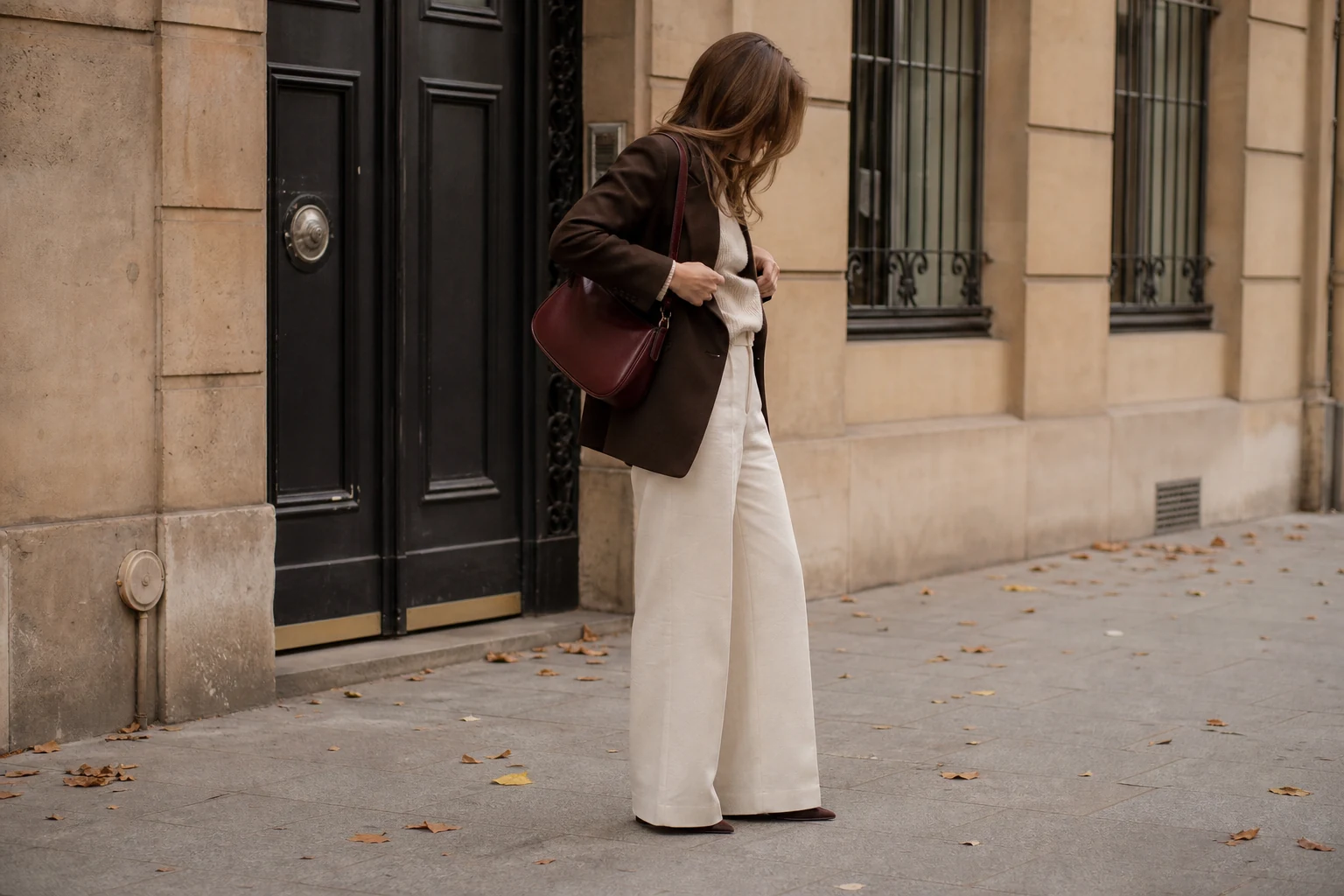
The rule helps because it gives your eye a hierarchy. Once you can see that hierarchy, you can break it on purpose—which is much more fun than breaking it by accident.
When in Doubt, Find a Quiet Color
If you own a color you love but rarely wear because it seems difficult, do not immediately pair it with another color that also wants its own press tour. Start with a neutral.
- Red becomes more grown-up with soft grey.
- Green feels easier beside cream and warm brown.
- Burnt orange gets richer with deep navy.
Neutrals are not there to make an outfit boring. They are there to make room. Think of them as the friend at dinner who asks the perfect follow-up question instead of launching a competing story. Essential. Underappreciated. Probably the person who remembers where everyone left their coat.
Tonal Dressing: Same Family, Better Light
Tonal dressing means wearing different shades from the same color family. Not identical head-to-toe color; that can look more uniform than intention. The point is a progression: cream into oatmeal, oatmeal into camel, camel into deep brown.
It is one of the easiest ways to make a simple outfit look considered, because the eye follows one continuous color story while the different textures keep it alive. A ribbed cream knit, oat trousers, a camel coat, and brown leather boots are not trying to match exactly. They are related. Like cousins who all got the good hair.

For another route into tonal outfits, read how to find your color palette. You do not need a complicated system to begin. Notice which shades make you feel awake, which ones work together in your closet, and which ones you reach for without negotiating with yourself for ten minutes.
The Point Is Not More Clothes
The best-dressed person you know may not own more than you do. She may simply understand which pieces can sit next to each other. She has a few base colors, a couple of accents, and the confidence to let one color lead.
That is how a closet starts giving you more outfits without receiving another parcel. Very chic. Financially responsible. Slightly suspicious, but chic.
The next time you are getting dressed, try this: start with a base color you trust, add one supporting shade, then choose whether the outfit needs an accent at all. Often, the answer is no. And that is not a failure of imagination. It is called editing.
Ready to Refresh Your Wardrobe?
Discover JARIA New Arrivals — timeless pieces designed for confidence, comfort, and everyday elegance.
Shop NowMore from the Journal



The JARIA Edit
Style notes, straight to your inbox
Join the list for new arrivals, styling guides, and early access to seasonal collections.