Fabric Guides
Why Do Some Clothes Look Great in the Fitting Room but Feel Wrong Two Hours Later?
Texture, weight, stretch and breathability decide whether a beautiful piece becomes a favourite or stays in the back of your closet.
In This Guide
- It Looked Perfect Under the Fitting-Room Lights
- Looking Soft and Feeling Comfortable Are Different Jobs
- What Light Reveals That a Hanger Cannot
- The 30-Second Fitting-Room Fabric Test
- Four Useful Fabric Personalities
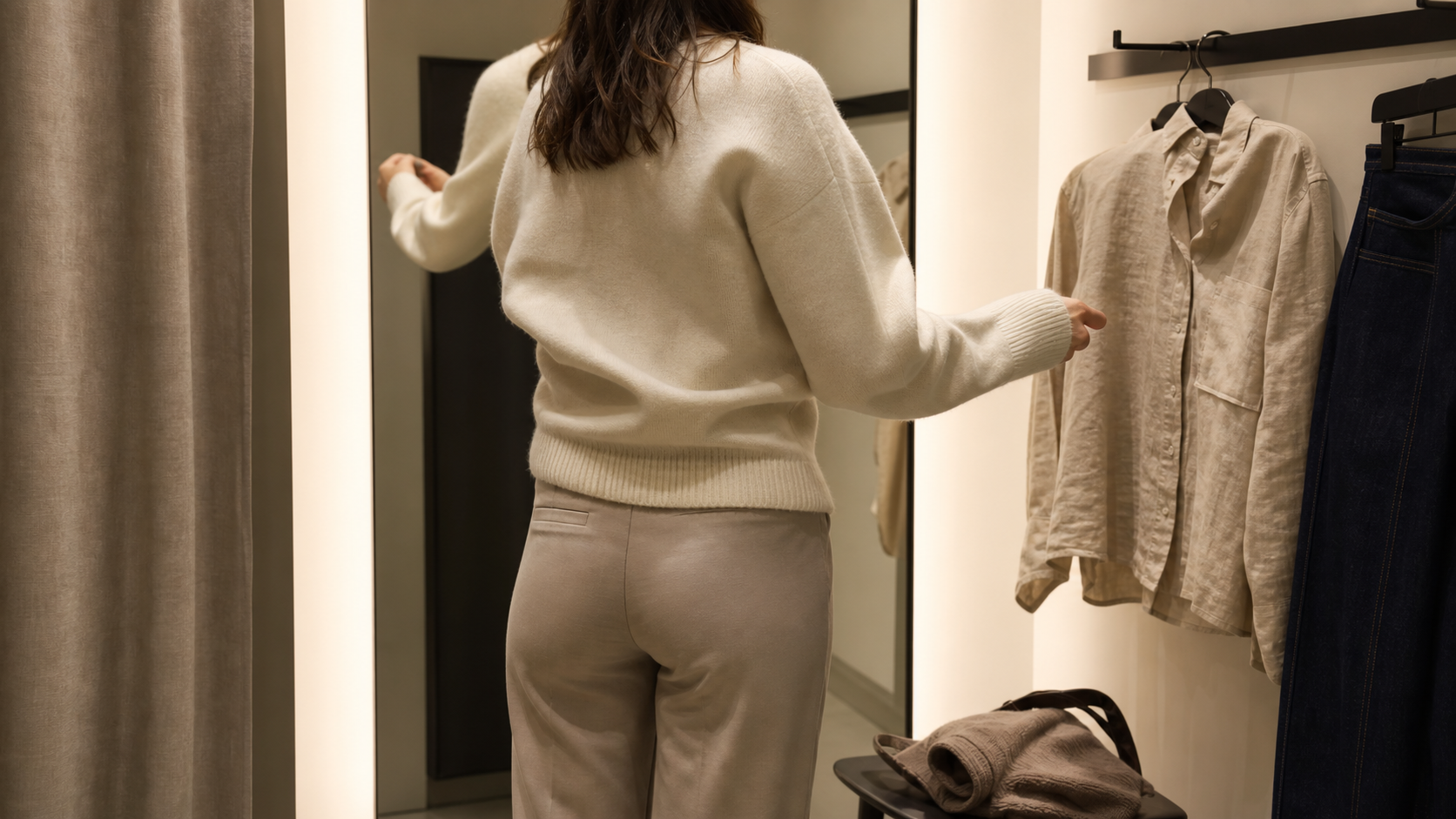
It Looked Perfect Under the Fitting-Room Lights
You know the feeling. The dress is flattering, the knit is soft, and for eleven optimistic minutes you become the kind of person who will hand-wash things. Two hours later, the neckline itches, the trousers crease in an unexpected location, and the lovely top has started a quiet argument with your skin.
The difference is fabric. Colour gets your attention, but texture, weight, stretch and breathability decide whether a piece earns a life outside the fitting room.
Looking Soft and Feeling Comfortable Are Different Jobs
A fabric can feel beautifully soft on your hand and still feel wrong after a commute, a lunch, and a heated train. Touch is the opening line, not the whole conversation.
When you try something on, notice four things: does it breathe, does it move with you, does it recover after a stretch, and does it become more or less comfortable after five minutes? The answer tells you much more than a label ever will.
What Light Reveals That a Hanger Cannot
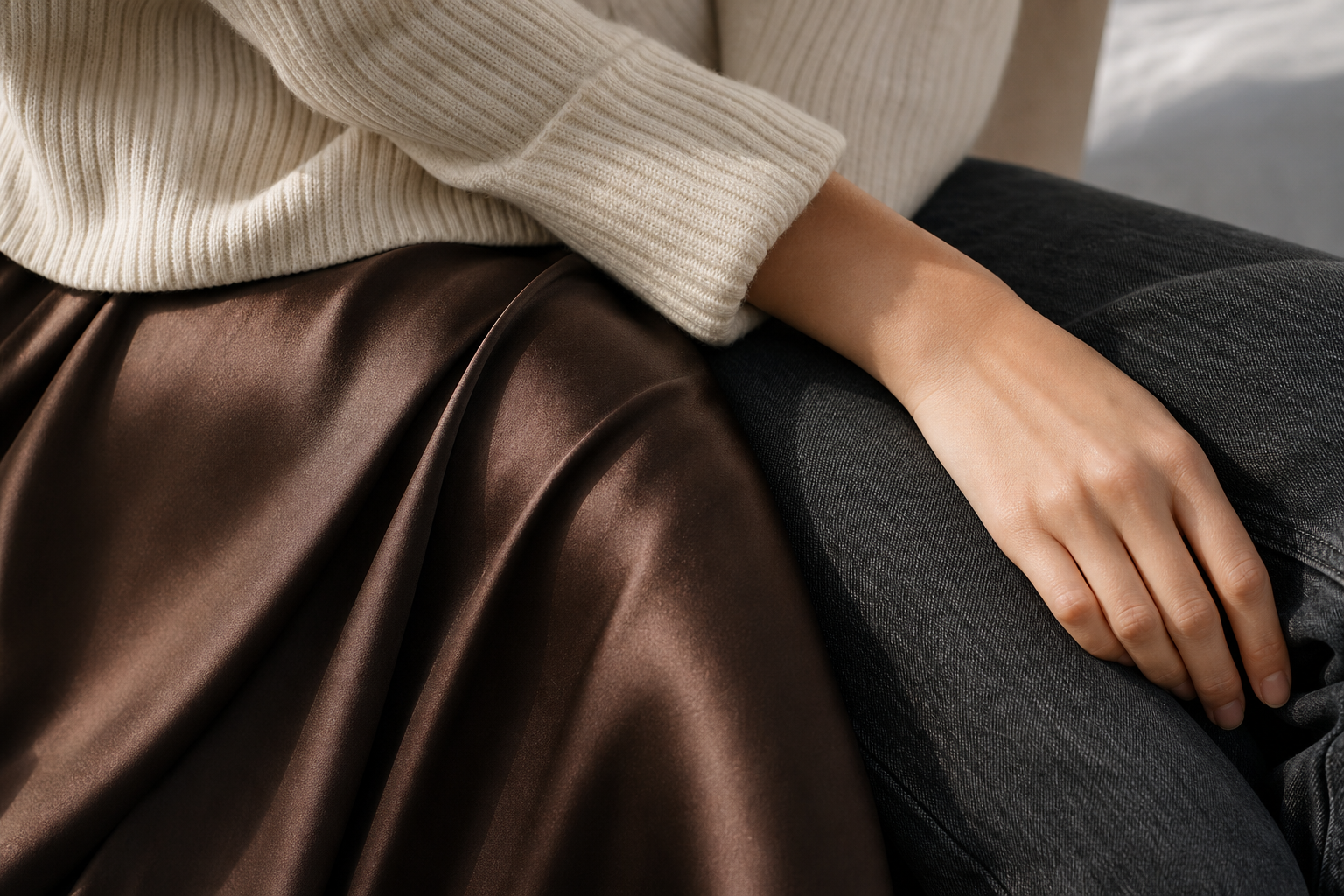
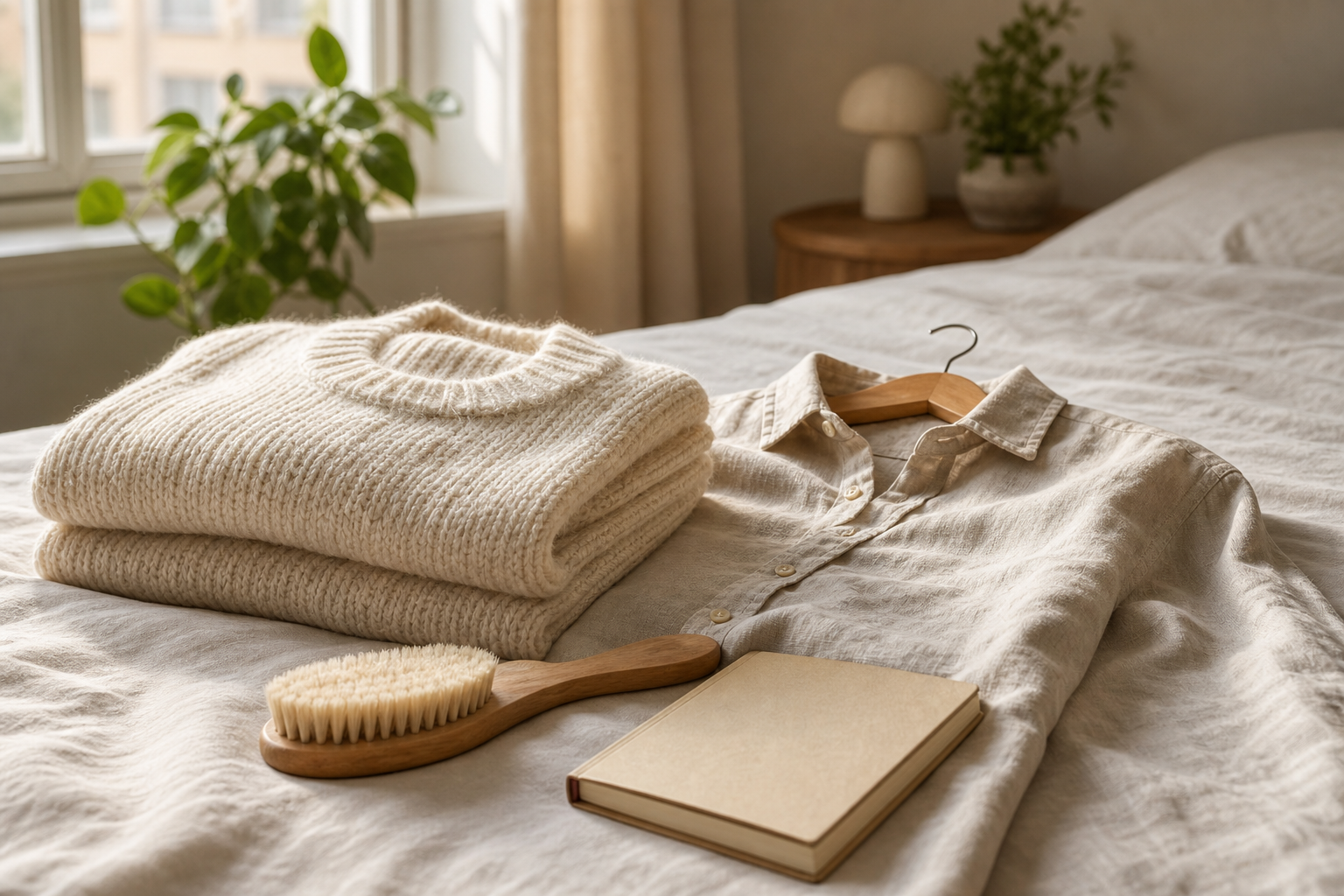
Fabric changes character in motion and in light. Satin catches the room and makes an outfit feel fluid; matte cotton quiets it down. Dense knit gives shape; linen brings air and an honest little crease. Denim has structure, while a soft jersey follows the body.
The most considered outfits usually mix these personalities. A ribbed cream knit with dark denim and a satin skirt is interesting because every surface is doing something different - no extra colour required.
The 30-Second Fitting-Room Fabric Test
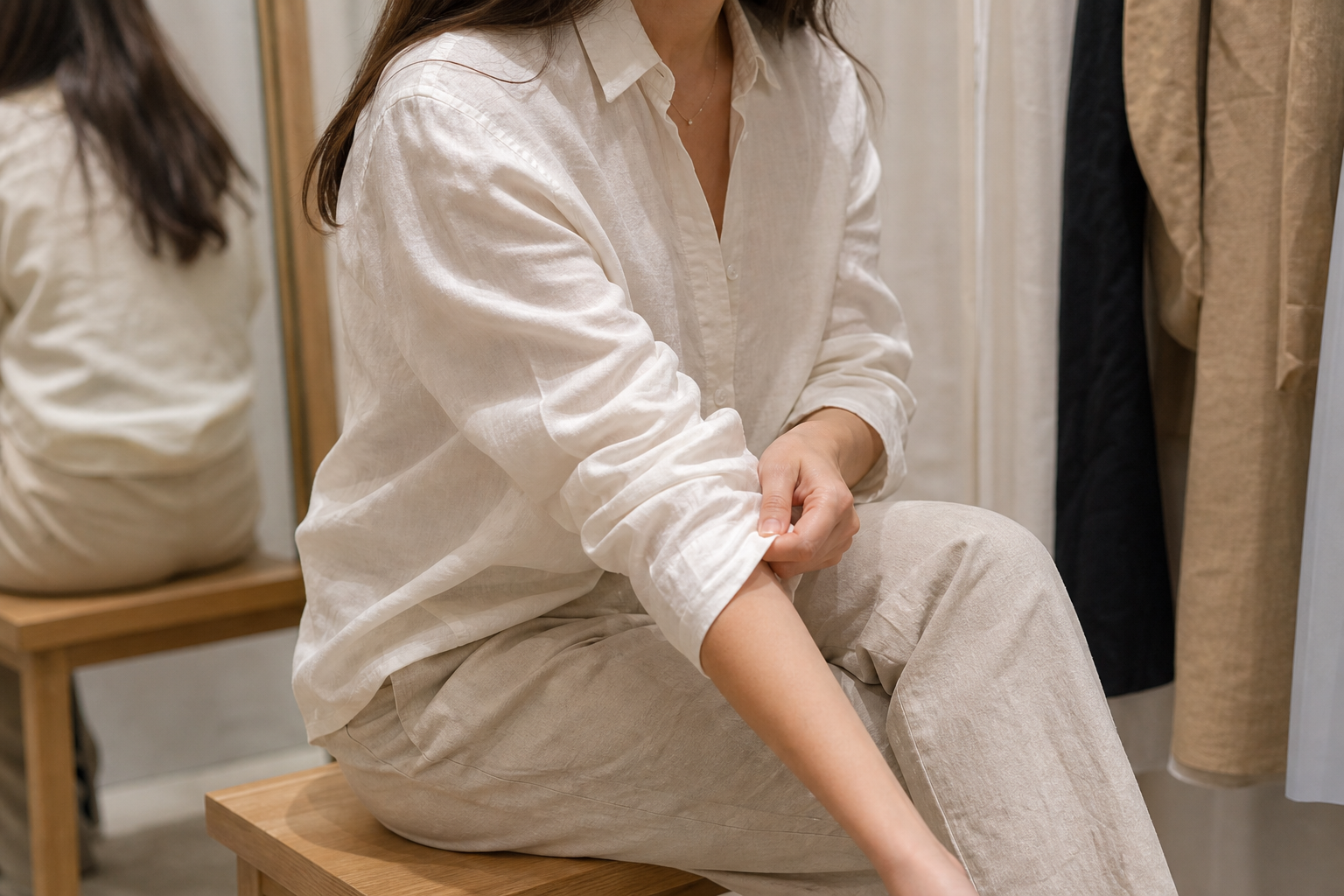
Before you decide, do four unglamorous but very useful things:
- Sit down. Does the fabric pull, bunch, or suddenly reveal its entire future?
- Lift your arms. Does the sleeve return to where it began?
- Pinch a small section. Does it spring back, keep its crease, or feel thin enough to negotiate with daylight?
- Walk to a different light source. Colour and opacity can change completely.
If a garment already needs constant diplomacy in the fitting room, it rarely becomes easier at home.
Four Useful Fabric Personalities
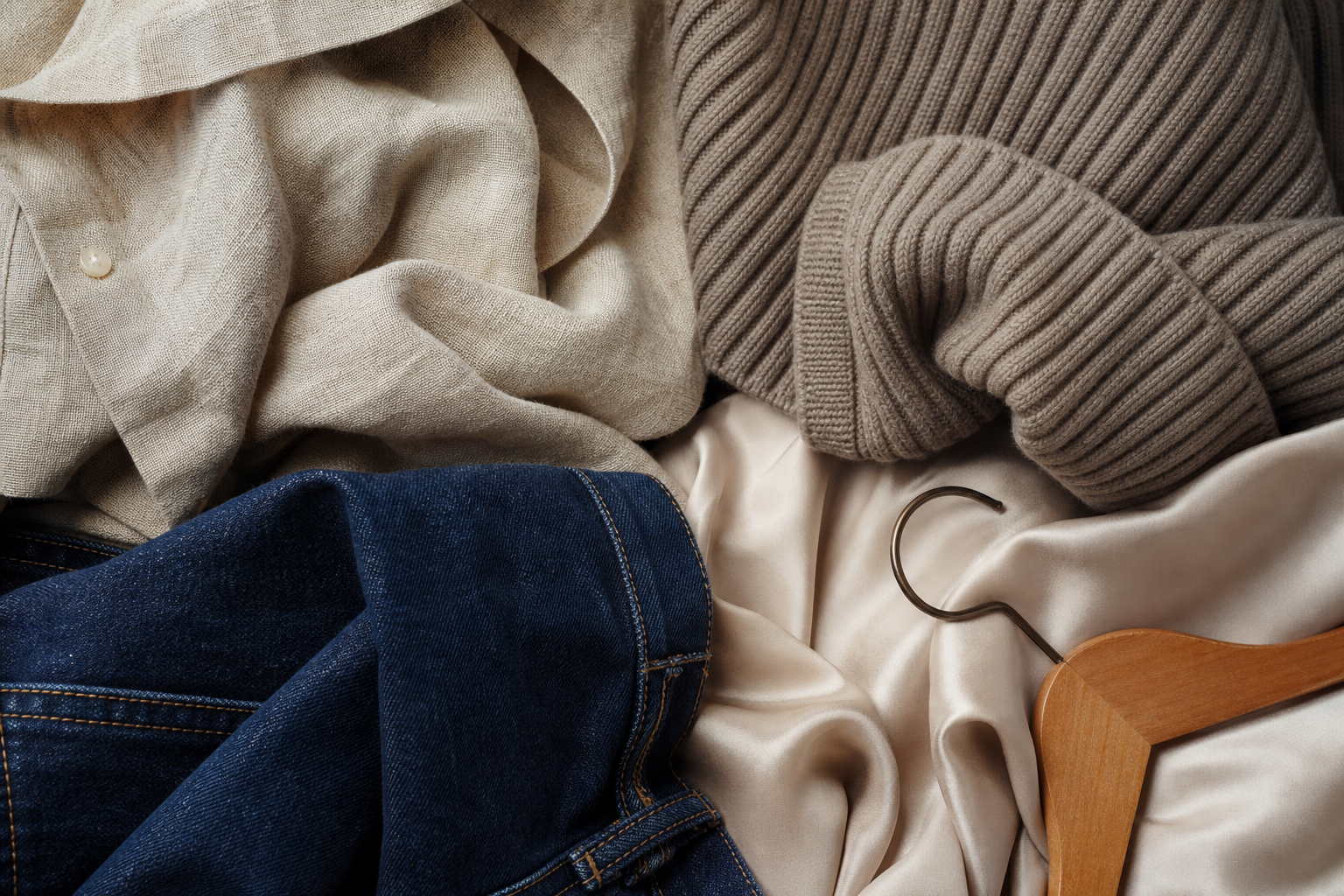
Cotton is dependable and easy to live in. Look for enough weight and a weave that holds its shape.
Linen is breathable, relaxed and meant to crease a little. Its charm is not perfection; it is ease.
Knitwear should be judged by density and recovery, not softness alone. A knit that bounces back will usually remain a favourite longer.
Satin and fluid fabrics bring light and movement. Pair them with something matte - denim, wool, cotton or a textured knit - so the look stays grounded.
Buy for the Life of the Fabric
Good fabric is not always the most delicate fabric. It is the material that suits your life and keeps doing its job. A beautiful linen shirt that gets softer with wear may serve you better than a precious blouse that makes you hold your breath near coffee.
Care is part of the decision, too. Can you wash it? Will you wear it enough to justify dry cleaning? Does it need a quick steam or an entirely different lifestyle? There is no prize for owning difficult clothes.
The next time something looks good in the mirror, give it one more question: will I still like how this feels at 4 p.m.? That is where the best purchases begin.
Ready to Refresh Your Wardrobe?
Discover JARIA New Arrivals — timeless pieces designed for confidence, comfort, and everyday elegance.
Shop NowMore from the Journal


The JARIA Edit
Style notes, straight to your inbox
Join the list for new arrivals, styling guides, and early access to seasonal collections.